Recycled Materials and Marine Waste: The Technical Journey from Recovery to High-Value Products
In the global shift toward a circular economy, the recycling and reuse of plastics have become pivotal issues. This article systematically outlines the processing workflows for recycled plastics and marine waste, further exploring how these materials are transformed into high-quality products that meet market demands through professional manufacturing technologies.
The Standardized Recycling Process for Recycled Plastics
Converting plastic waste into reusable raw materials is a rigorous, multi-step process:
- Collection and Sorting: Plastic waste is first systematically collected and categorized by material (e.g., PET, HDPE, PP) and color using manual or optical sorting technologies to ensure purity for downstream processing.
- Washing and Crushing: Sorted plastics undergo thorough washing to remove labels, residues, dirt, and sand. The cleaned material is then fed into a crusher and pulverized into uniform flakes, increasing surface area for subsequent melting.
- Melting and Pelletizing: After drying, the flakes are fed into an extruder to be heated and melted. During this phase, the melt passes through a precision filtration system to remove micron-scale impurities. Finally, the purified melt is extruded, cooled, and cut into uniform "recycled pellets."
The quality of these pellets determines their application range in downstream manufacturing. Particularly in blow molding—which demands high material homogeneity and strength—the melt strength, flow stability, and cleanliness of the pellets directly impact the wall thickness uniformity and impact resistance of final products (such as containers and drums). Therefore, a high-standard pelletizing process is the foundation for achieving high-value applications.
Specialized Recovery and Challenges of Marine Waste
Among marine waste (ocean plastic), discarded fishing nets and ropes are priority targets due to their durability, bulk, and tendency to entangle marine life. Their recycling process involves unique requirements:
- Collection and Classification: Recovered nets are often mixed with sand, salt, and biofouling. They must first be classified by primary material (e.g., Nylon, PE).
- Deep Cleaning and Treatment: Compared to land-based waste, marine waste requires more intensive mechanical and chemical washing to completely remove salts and organic matter, preventing equipment corrosion and product degradation during processing.
- Reprocessing into Raw Materials: Cleaned nets are crushed, melted, and re-pelletized into "Ocean Plastic Recycled Resin." This material often suffers from molecular chain degradation due to UV exposure and physical wear, which can affect its processability.
Applying marine waste to product manufacturing is not just an eco-friendly act but a technical challenge. Developers must overcome performance instability and color variations to move beyond the limitations of dark-colored or low-end applications, reaching toward high-quality consumer and industrial products.
From Recycled Material to End Product: Technical Integration of Blow Molding
Transforming recycled or marine waste pellets into structural containers is a key step in value elevation. Blow molding technology plays a vital role here, forming hollow products by inflating a molten plastic parison against a mold. This process presents core requirements and solutions for recycled materials:
- Material Compatibility and Modification: Recycled materials from different sources vary in performance. Precise "compatibilization and modification" techniques are often required to adjust rheological properties, meeting the strict demands for melt strength and ductility during blow molding.
- Innovation in Design Thinking: Successful recycled products often stem from "Design for Circularity." Examples include using mono-materials and modular designs to ensure easy recycling at the end of the product life cycle, or optimizing structures to reduce weight while maintaining load-bearing strength, thereby reducing the carbon footprint at the source.
- Breakthroughs in Color and Aesthetics: Through surface treatments and masterbatch technology, the inherent dullness of recycled materials can be overcome. This provides diverse color options, ensuring eco-friendly products possess the aesthetic appeal to integrate into daily life.
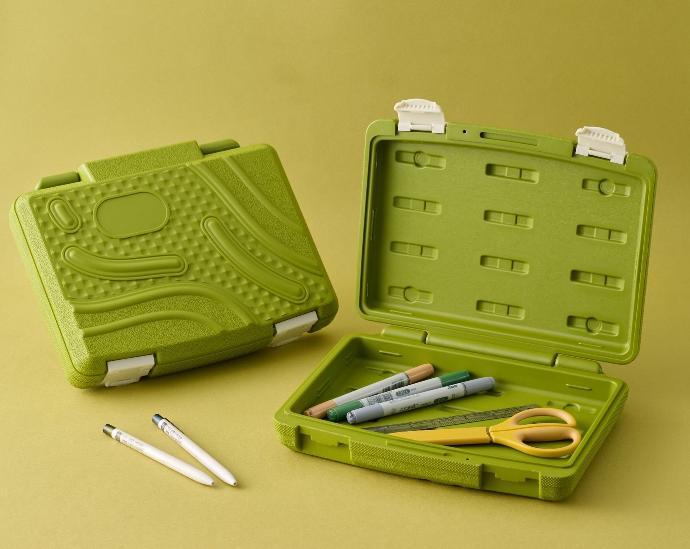
In industrial practice, Jade Green has successfully applied recycled fishing net materials to manufacture the "Easy-Stack Marine Waste Universal Crate." This product embodies the technical integration mentioned above: it achieves a 20% weight reduction and excellent stacking stability. Furthermore, its innovative "Seaweed Green" hue has shifted public perception of recycled products. Having received numerous domestic and international design and circular economy awards, it proves the feasibility of these technical breakthroughs.
The Convergence of Knowledge, Technology, and Responsibility
The journey of recycled materials and marine waste from recovery to high-value products is a systemic knowledge chain blending materials science, process engineering, and innovative design. Every technical advancement carves a more pragmatic path for the plastic circular economy.
As a long-term practitioner in the field of blow molding, Jade Green Plastic profoundly understands these challenges and potentials. We continuously invest in the processing and application of recycled materials, striving to transform reliable circular materials into high-quality, eco-friendly products for our clients through professional manufacturing. We believe that only by standing on a foundation of solid knowledge and technology can the vision of sustainable development be steadily realized within every product life cycle.